Minegishi Kidnapping and Fujisawa Rescue
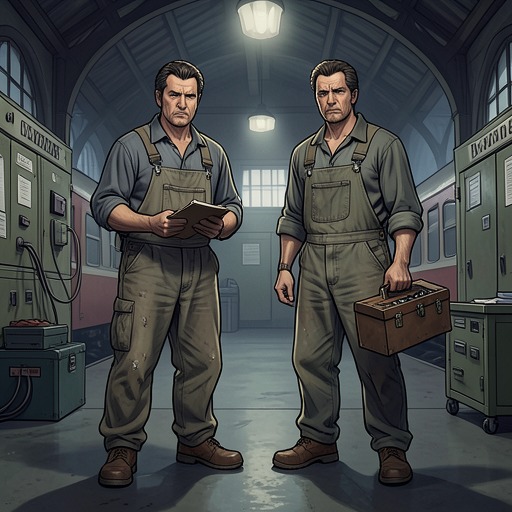
Bullet TrainThe Minegishi Kidnapping and Fujisawa Rescue brings together a father’s ordered priorities, a captive’s fear that ransom will not save him, and the lethal work of the two men sent to retrieve him. Tangerine and Lemon free Yoshio Minegishi’s only son from an underground room in Fujisawa Kongocho. The rescue achieves its foremost aim, but the reported death toll and the disappearance of the ransom suitcase make clear that a successful extraction is not the same as a clean resolution.
Background and Stakes
Minegishi contacted Tangerine and Lemon from Morioka and tasked them with delivering ransom money to the captors and rescuing his son. He also wanted everyone involved killed. The assignment therefore joined three objectives that could pull in different directions: recover the young man alive, bring back the money, and eliminate the perpetrators.
Minegishi ranked those objectives rather than treating them as interchangeable. His son’s return came first, the ransom money second, and killing the captors third. That order gives the mission a clear measure of success, even as the breadth of the request makes its execution more complicated than a straightforward exchange. Lemon later grumbled that Minegishi expected them to save his son, recover the ransom, and kill everyone involved, as if every demand could simply be fulfilled.
The hostage was Minegishi’s only son, a young man in his early twenties. By the time he spoke with Tangerine and Lemon after the rescue, he had been held in a room three floors underground and was already looking much improved. His account conveys why the rescue mattered beyond the recovery of a valuable captive: he believed the group holding him hated his father and suspected that they would kill him even if the ransom were paid. Tangerine confirmed that this fear was well founded, saying that the captors would have killed him once they had the money.
The Rescue at Fujisawa Kongocho
The holding site was a building in the Fujisawa Kongocho area. The young man recalled being tied up and held underground by what he estimated to be about thirty people. He had thought he was unlikely to survive. The account establishes the scale of his isolation without presenting the rescue as a negotiated handover: Tangerine and Lemon broke into the situation and got him out.
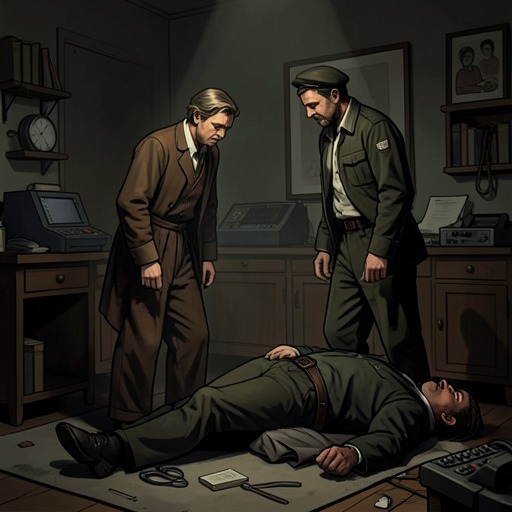
The operation also involved lethal force. A later news report described thirteen people dead in the Fujisawa Kongocho killings and noted that security cameras at the scene had been sabotaged. Lemon heard the report while aboard the train and did not react strongly to the number at first; the darkness of the underground room had left him uncertain how many people he had shot. He later estimated that he had killed at least six, probably more, while Tangerine had killed the rest. The report supplies a public tally, while Lemon’s recollection gives the two rescuers’ division of responsibility; neither account provides a more exact breakdown.
The camera sabotage is part of the report on the killings, but the available account does not identify who carried it out. It therefore marks the scene as one where surveillance had been deliberately disabled without establishing which participant was responsible. The violence and the rescue belong to the same operation: Minegishi’s son was recovered, while thirteen people were reported dead.
Objectives and Immediate Aftermath
After the rescue, the young man thanked the men who had saved him. His gratitude sits alongside his fear and his blunt assessment of the danger: he had believed that payment would not protect him. Tangerine’s response undercuts any comforting idea that the ransom alone could have resolved the crisis. The captors’ hostility toward Minegishi meant that the money, if delivered, would not necessarily have brought his son home alive.
The ransom itself became an immediate complication. On the train, Tangerine realized that the suitcase containing the money was nowhere under the seat or on the luggage rack where he expected it. Its absence meant that the mission’s second-ranked objective had not been secured, even though the first had been accomplished. The discovery does not establish when or how the suitcase disappeared, but it changes the apparent outcome of the rescue: the son was safe with Tangerine and Lemon, while the money was unaccounted for.
Tangerine and Lemon stepped onto a station platform and looked along the train to see whether anyone was getting off. They saw no one leave. They did notice an unfamiliar man in a flat cap standing a few cars away and pointing into the train, but the sighting alone did not identify him or connect him to the missing case. The search thus begins with observation rather than resolution: the men have a conspicuous absence to explain, but no confirmed lead in the scene described.
Consequences and Significance
The rescue continues to shape the journey after the men leave Fujisawa Kongocho. Once Minegishi knew which train would carry his son, he bought all the available seats. He explained that he wanted to reduce the number of passengers and variables, making it easier for Tangerine and Lemon to keep the young man safe. The purchase reflects a later effort to control the conditions around his son’s transport, extending the protection begun by the rescue into the next stage of the journey.
The event’s central reversal is that the most important goal and the most visible cost arrive together: Minegishi’s son is brought out alive, while the rescue leaves a reported toll of thirteen dead. The missing suitcase then frustrates the second priority, and the platform search offers no immediate identification of whoever may have taken it. The mission is therefore neither a simple triumph nor an uncomplicated failure. Its outcome separates the priorities Minegishi had ranked: the son is recovered, the money is missing, and the killing of the captors has been carried out at a scale later measured by the news report.
The episode also establishes the practical danger beneath Minegishi’s apparently simple request. His son’s fear that ransom would not secure his release proves accurate; the rescue requires more than carrying money to a waiting group. As the men continue by train, the case and the missing suitcase keep the consequences of the operation in motion, while Minegishi’s later purchase of the seats shows how the successful extraction gives way to another problem: keeping his son safe beyond the underground room.